
This ScalaHosting Review is most useful for buyers who want more than entry-level shared hosting but do not necessarily want to run every part of a VPS themselves. ScalaHosting’s managed cloud VPS plans combine server management with SPanel, a dedicated IP, offsite backups, migration assistance, and resources that can be adjusted as a project grows.
The main qualification is that ScalaHosting is not one service with one set of limits. Shared web hosting, managed cloud VPS, self-managed VPS, Managed AWS, business email, and custom clusters have different prices, responsibilities, locations, support expectations, and capacity. Managed cloud VPS is the strongest fit for growing WordPress sites, agencies, and businesses that need server help, while self-managed VPS makes sense only if you can administer Linux servers yourself.
The published regular prices make renewal planning important. A managed cloud VPS begins at $54.95 per month after the introductory rate, and the entry business email plan renews at $12.95 per month. That is a meaningful jump from the advertised opening figures, so choose based on the regular cost rather than the first invoice, and consult the Coupons and Discounts section for any offer we can verify.
What ScalaHosting actually sells
ScalaHosting offers cloud-based hosting in several tiers. The entry point is web hosting for personal projects and smaller sites. Above that sit managed and unmanaged cloud VPS services, which allocate defined CPU, RAM, and storage resources to your server rather than placing your site in a shared hosting environment.
Managed cloud VPS is the service most buyers will compare with other managed WordPress or business hosting plans. ScalaHosting says it handles initial server setup, hardware monitoring, software installation, maintenance, and issue resolution. You still manage websites and applications, but you are not responsible for the operating system and routine server care.
Self-managed cloud VPS gives you root access and more direct control, but it does not include ongoing server-administration support. It is for experienced developers and system administrators who have a reason to choose the operating system, configure services, troubleshoot server software, and manage security work themselves.
The remaining products serve narrower jobs. Managed AWS Hosting is a Lightsail-based VPS service that ScalaHosting manages through SPanel. Business Email Hosting provides custom-domain email without being positioned as website hosting. Cluster Hosting is a custom, multi-node service for larger applications that need an architecture designed around their workload.
| Service | What it is for | Management level | Published starting point |
|---|---|---|---|
| Web hosting | Personal sites and hobby projects | Provider-managed hosting | From $2.95 per month |
| Managed cloud VPS | Growing sites, agencies, business projects | Server management included | $54.95 per month regular |
| Self-managed cloud VPS | Administrators needing root control | Customer manages the server | From $24.95 per month regular |
| Managed AWS Hosting | Managed Lightsail-based VPS | Server management included | From $61.95 per month |
| Business Email Hosting | Custom-domain business email | Hosted email service | $12.95 per month regular |
| Cluster Hosting | High-traffic, complex applications | Custom managed architecture | Tailored quote |
Who will get the most value from ScalaHosting
Managed cloud VPS is the practical middle ground for a business that has outgrown shared hosting but does not employ a server administrator. The published plans include a dedicated IP, automatic offsite backups, unmetered bandwidth, migration help, SSH and WP-CLI access, and WordPress staging and cloning. Those inclusions matter most if your website is commercially important and you need more room to grow without taking on routine server work.
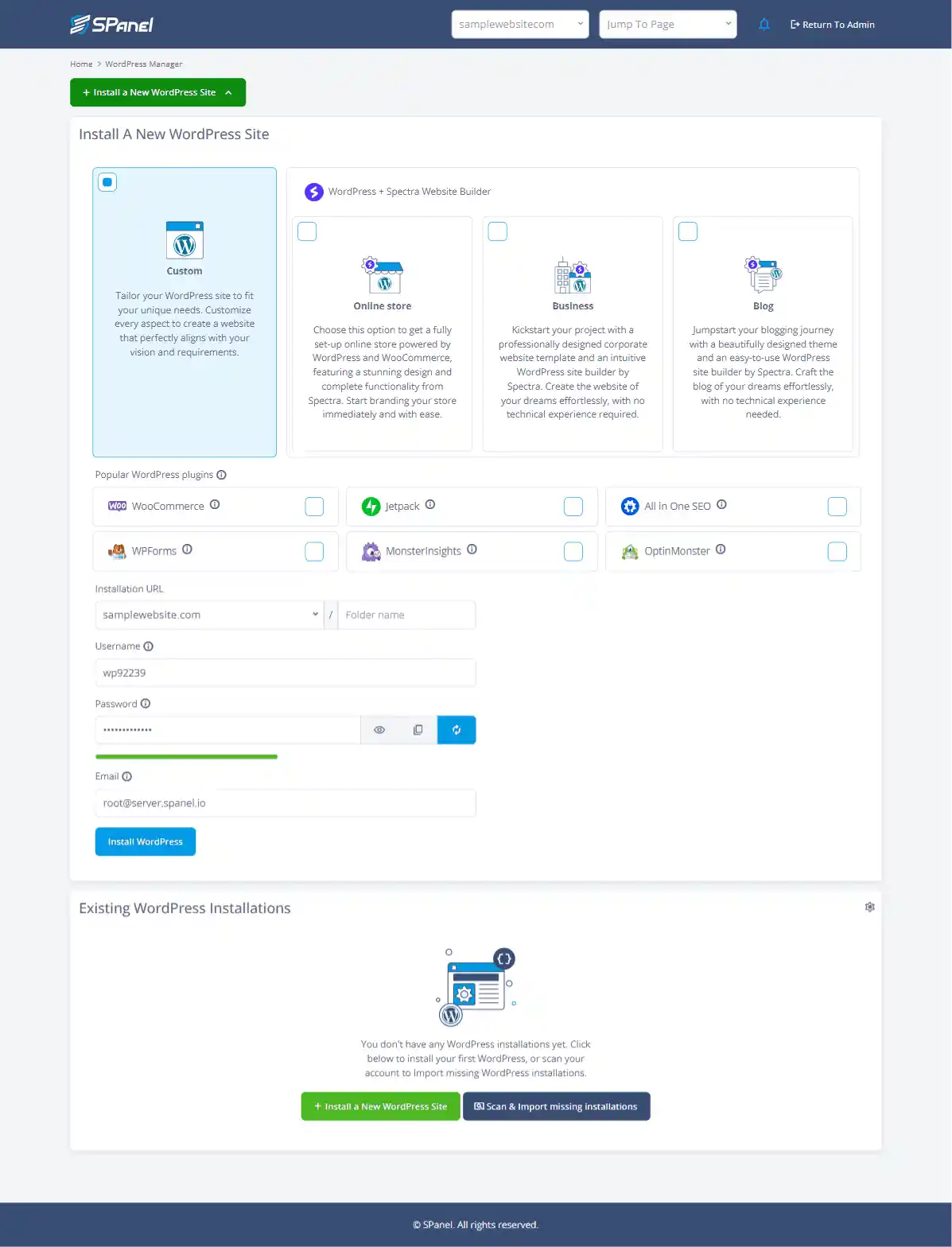
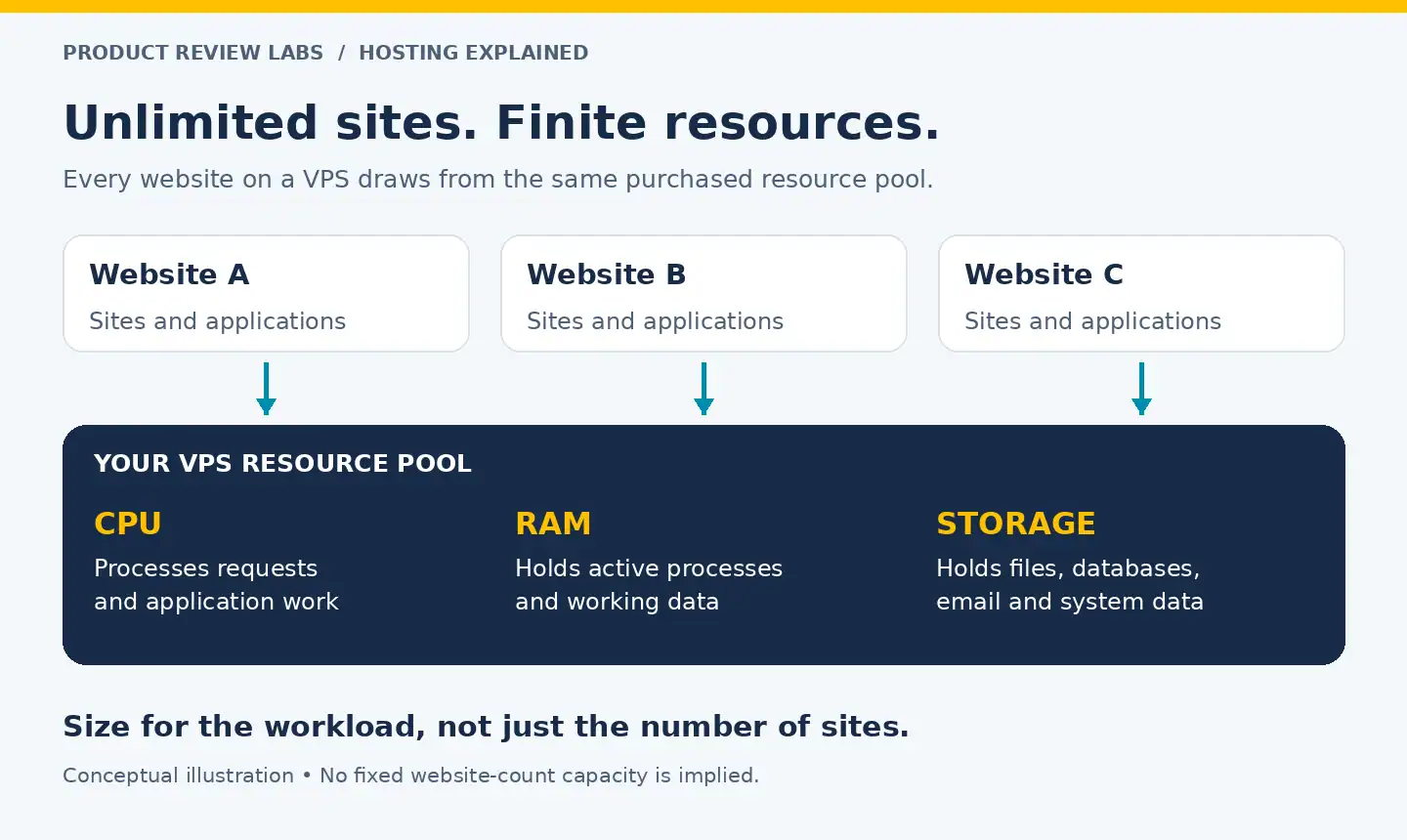
It also suits agencies managing several client sites. ScalaHosting lists white-label and client-management features on managed cloud VPS, along with unlimited email accounts and databases. The useful distinction is capacity, not a site-count promise: a single VPS can hold multiple sites, but CPU, RAM, and disk space determine how much work it can realistically carry.
Self-managed VPS suits a different buyer. Root access, selectable Linux distributions, Windows options, snapshots, and adjustable resources give experienced teams flexibility. But an unmanaged plan does not turn a hosting provider into your system administration department, so even with a discount, a lower starting price only makes sense if your team can handle the work it excludes.
Cluster Hosting is aimed at SaaS products, ecommerce operations, public platforms, and organisations with high-traffic applications. It is not an upgrade that an ordinary WordPress site should buy just because it sounds more resilient. Its minimum five-node starting architecture and tailored pricing point to a project with genuine scaling and availability requirements.
Managed versus unmanaged cloud VPS
The choice between managed and unmanaged cloud VPS changes both the monthly cost and the division of responsibility. Managed cloud VPS includes ScalaHosting’s stated server setup, monitoring, maintenance, software installation, and issue-resolution work. That removes much of the infrastructure burden for a site owner who needs a VPS but does not want to maintain one.

The managed plans range from 2 CPU cores, 4 GB RAM, and 50 GB NVMe storage to 12 CPU cores, 24 GB RAM, and 200 GB NVMe storage. All four published builds list unmetered bandwidth, automatic offsite backups, and a dedicated IP. ScalaHosting says CPU, memory, and storage can be changed from the client account without moving to a different server, with automated upgrades taking one to three minutes.
Unmanaged plans list root access, snapshots, one dedicated IP, and SPanel on demand. ScalaHosting offers Rocky Linux, Debian, Ubuntu, AlmaLinux, and Windows choices, although Windows Server adds a licence fee. This is a sensible route for a team that needs server-level freedom, but not for a beginner who expects help repairing a failed configuration or managing the server’s software stack.
Both VPS types can host multiple websites and applications. “Unlimited websites” should be read as no fixed site-count ceiling, not unlimited computing capacity. A dozen lightweight brochure sites may fit comfortably on a small VPS, while one database-heavy application may require a larger build.
| Area | Managed cloud VPS | Self-managed cloud VPS |
|---|---|---|
| Server setup and maintenance | ScalaHosting says it is included | Customer responsibility |
| Ongoing server administration | Provider-managed | Not included |
| Root access | Not highlighted as the core service | Included |
| Resources | 2 cores/4 GB/50 GB to 12 cores/24 GB/200 GB | Four sample configurations |
| Bandwidth | Unmetered on listed standard plans | Plan-specific published configurations |
| Best fit | Businesses and agencies without an administrator | Experienced developers and power users |
SPanel and the day-to-day hosting workflow
SPanel is ScalaHosting’s control panel for shared hosting and cloud VPS plans. It is intended to put website management, application installation, email, security settings, Cloudflare CDN integration, and site-management tasks in one place. For a buyer moving from a host that uses a different panel, the value is fewer separate tools for ordinary hosting work.
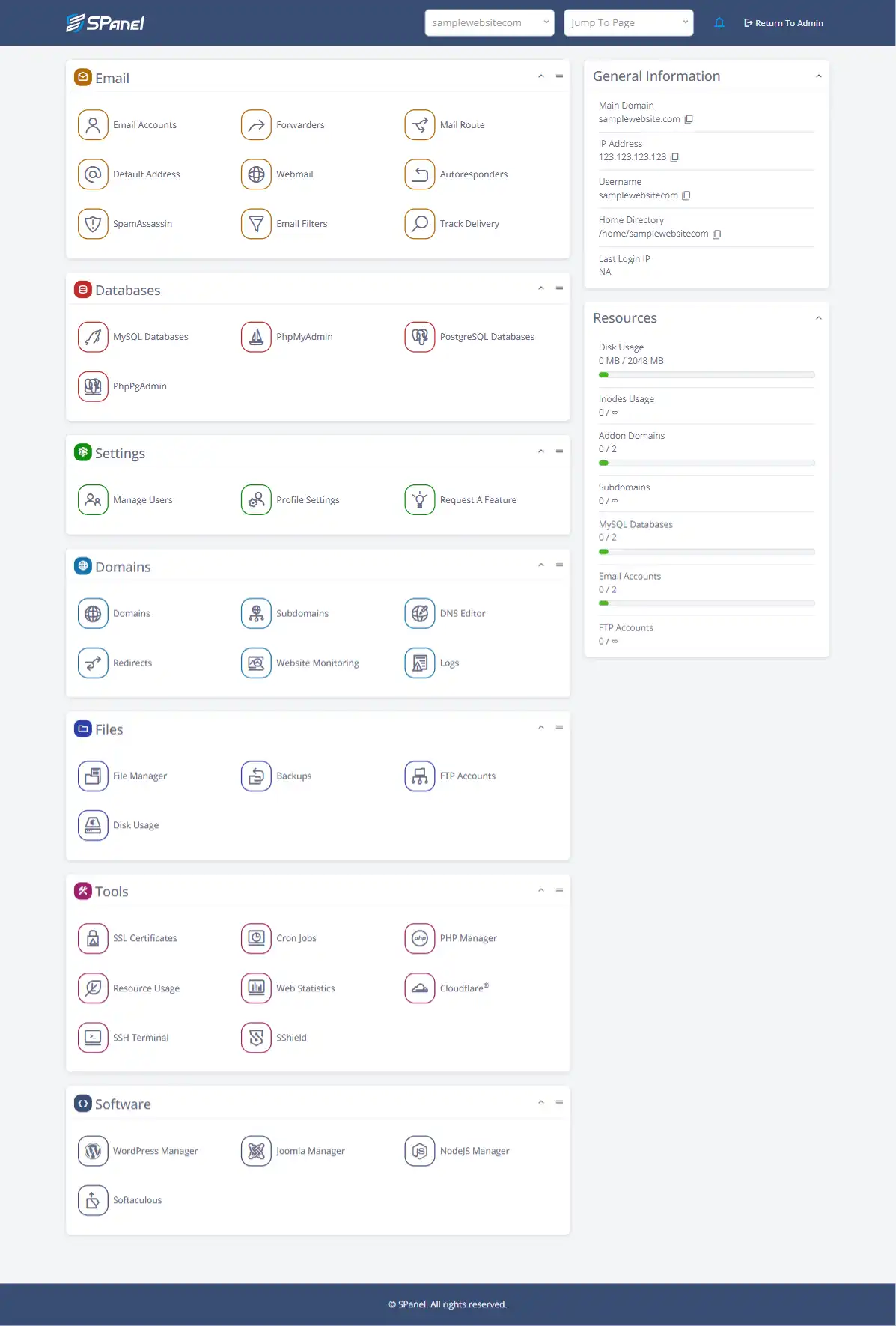
ScalaHosting says SPanel includes Cloudflare integration and supports app installation, while managed plans also list WordPress staging, cloning, SSH, WP-CLI, private DNS, and on-demand backup copies. For an agency, those features can reduce the friction of maintaining several WordPress installs without needing a separate staging service for every site.
A third-party review described SPanel as generally approachable, but found some submenus awkward and reported a manual nameserver-copying step when connecting a domain to cloud or VPS hosting. That does not make the panel unusable, but it is a fair reason to expect a short learning period if you are used to cPanel or another familiar dashboard.
SPanel is available on demand for self-managed VPS plans. ScalaHosting says some performance features require it, so choose SPanel if you want its management and Cloudflare tools rather than assuming every operating-system configuration carries the same extras.
Performance, infrastructure, and location options
ScalaHosting promotes cloud infrastructure with failover, redundancy, load balancing, and scaling. It also says managed cloud plans can use OpenLiteSpeed with LiteSpeed Cache, object cache, and Gzip compression. Those components can be helpful for WordPress sites, but actual speed still depends on the application, traffic pattern, plugins, database work, and the resources purchased.
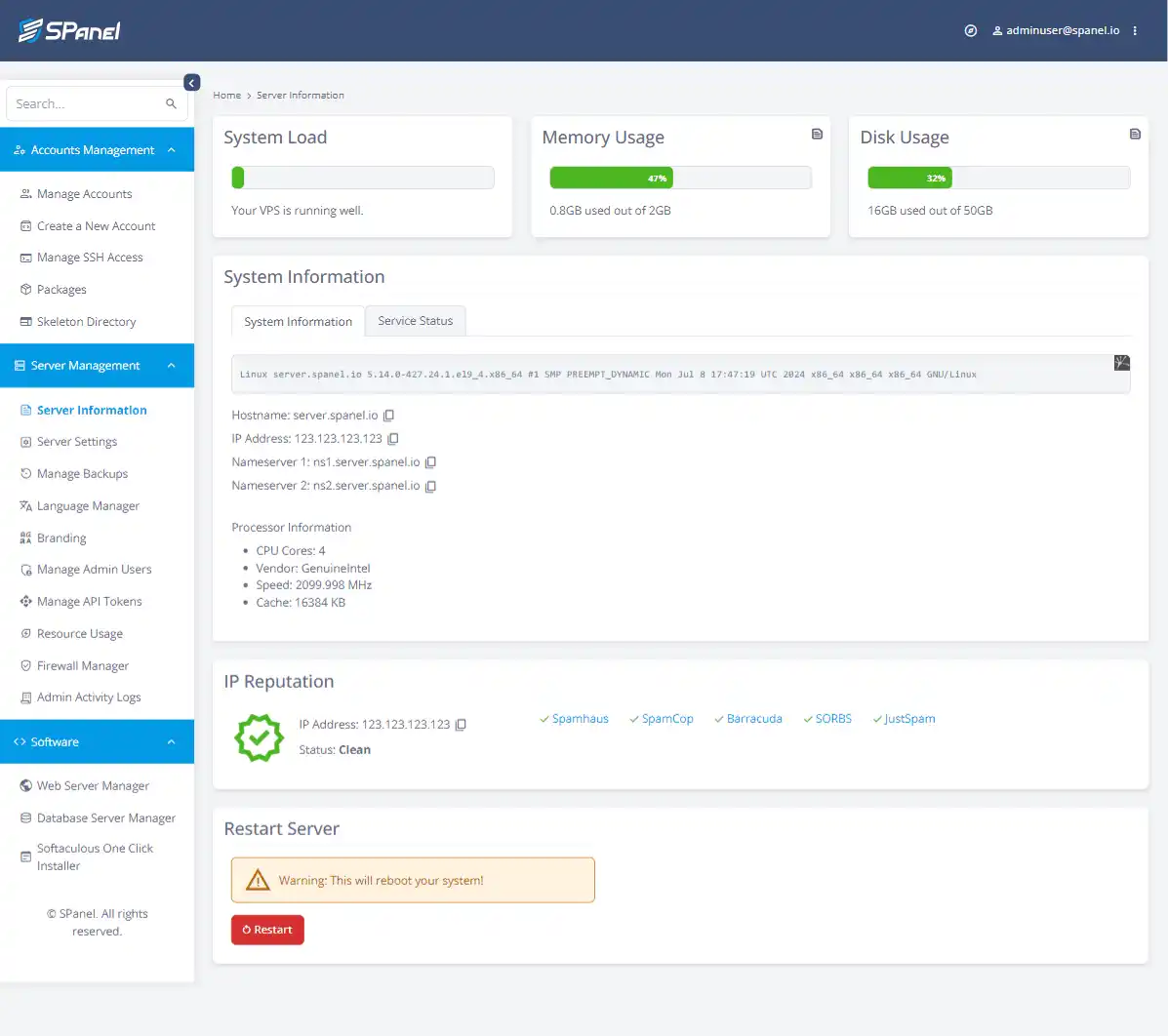
The provider lists data-center options across North America, Europe, Asia-Pacific, and AWS infrastructure. Choosing a location near your audience can reduce network distance, which is a sensible consideration for region-focused sites. Available locations depend on the service and its underlying infrastructure, so a particular native, integrated-cloud, or AWS location is not universal across all plans.
Managed cloud and cluster pages advertise a 99.99% uptime service-level agreement, while ScalaHosting also makes a broader 99.9% uptime claim for its cloud infrastructure. The terms describe the remedy for qualifying downtime as account credit requested through a billing ticket, rather than a cash refund. Businesses that rely on contractual service remedies should understand that distinction.
Cluster Hosting is more deliberately designed around availability than a standard VPS. ScalaHosting outlines single-data-center clusters from five nodes, multi-data-center clusters from 10 nodes, and multi-region deployments from 15 nodes. It says capacity expansion is approved after usage passes 80% or another agreed threshold, which keeps customers involved in cost control but does not make expansion automatic.
ScalaHosting pricing and renewal costs
The prices below separate advertised introductory figures from published regular renewal figures where both are stated. The regular amount is the better budgeting number, particularly for managed VPS and business email, because a deal may reduce the initial bill while the opening price remains substantially lower than the ongoing cost.
Managed cloud VPS is the clearest example. Build #1 is advertised at $29.95 per month initially and renews at $54.95, while Build #4 is advertised at $94.95 and renews at $244.95. The resource increase may be justified for a busy site, but it is worth sizing the server for current needs rather than paying for capacity you cannot use.
Unmanaged VPS also has four sample configurations, with advertised monthly-equivalent introductory prices from $19.95 to $122.95 and published regular prices from $24.95 to $183.95. Its lower pricing reflects the transfer of administration work to you. Optional add-ons can raise the final cost, including monitoring, backups, control-panel licences, resource increases, and software licences, so weigh any coupon saving against the complete configured price.
Managed AWS Hosting is listed from $61.95 to $249.95 per month and can be prepaid in one, three, six, or 12-month periods. Its listed hardware scales from 2 CPU cores, 4 GB RAM, 80 GB storage, and 4 TB bandwidth to 8 cores, 32 GB RAM, 640 GB storage, and 7 TB bandwidth. The entry plan card labels its storage as SSD, while the AWS FAQ describes NVMe disk space.
| Service and plan | Advertised introductory rate | Published regular or renewal rate | Key capacity detail |
|---|---|---|---|
| Managed VPS Build #1 | $29.95/month | $54.95/month | 2 cores, 4 GB RAM, 50 GB NVMe |
| Managed VPS Build #2 | $44.95/month | $96.95/month | Published standard build |
| Managed VPS Build #3 | $69.95/month | $170.95/month | Published standard build |
| Managed VPS Build #4 | $94.95/month | $244.95/month | 12 cores, 24 GB RAM, 200 GB NVMe |
| Unmanaged VPS | $19.95 to $122.95/month equivalent | $24.95 to $183.95/month | Four sample configurations |
| Managed AWS Hosting | Not stated as an introductory range | $61.95 to $249.95/month | 2 to 8 cores, 4 to 32 GB RAM |
Business email hosting is a separate product
ScalaHosting’s Business Email Hosting is for organisations that want email at their own domain with webmail or standard email-client access. All published plans include webmail, POP3, IMAP, SMTP, spam filtering, and daily offsite backups. ScalaHosting says the accounts can be configured in Outlook, Thunderbird, Apple Mail, and mobile email apps.

The plans begin with StartUp and progress through SmallBiz, Medium, and Cloud. The page publishes total storage allocations by plan, while saying individual mailboxes have no size limit. In practice, the total allocation is the number that matters for a business with many people, large attachments, or years of retained mail.
The Cloud email plan adds a dedicated IP, blacklist monitoring, real-time malware protection, priority support, and a free domain according to ScalaHosting. Lower plans cap the number of email accounts and domains, so choose based on the number of addresses your organisation needs, not only the storage amount.
Use a web hosting or VPS plan for a website. ScalaHosting positions these email packages for email communication, and that narrower focus is useful if you do not want to bundle a website into the same service.
| Email plan | Advertised introductory rate | Published renewal rate | Plan position |
|---|---|---|---|
| StartUp | $4.95/month | $12.95/month | Entry business email |
| SmallBiz | $6.95/month | $15.95/month | Small-team tier |
| Medium | $9.95/month | $20.95/month | Larger allocation tier |
| Cloud | $14.95/month | $39.95/month | Premium email features |
Security, backups, and migration
Managed cloud VPS plans list free SSL certificates, AI-powered SShield protection, brute-force protection, suspicious-IP blocking, Cloudflare CDN integration, automatic offsite backups, snapshots, and malware protection. These are useful operational safeguards, particularly for a business that does not have its own hosting security process. They do not remove the need to keep WordPress, plugins, themes, and application code maintained.
ScalaHosting says it provides free assisted migration for managed hosting, including website files, databases, and email. The process requires credentials for the existing provider and a preferred transfer time. It also says provider-managed server upgrades are free, while lateral migrations between ScalaHosting-managed servers carry a charge.
Backups are included, but the terms make the buyer’s responsibility clear: provider backups are not guaranteed, and customers should keep independent backups. Treat the host’s copies as a useful recovery layer, not the only copy of a business site, customer data, or critical mailbox.
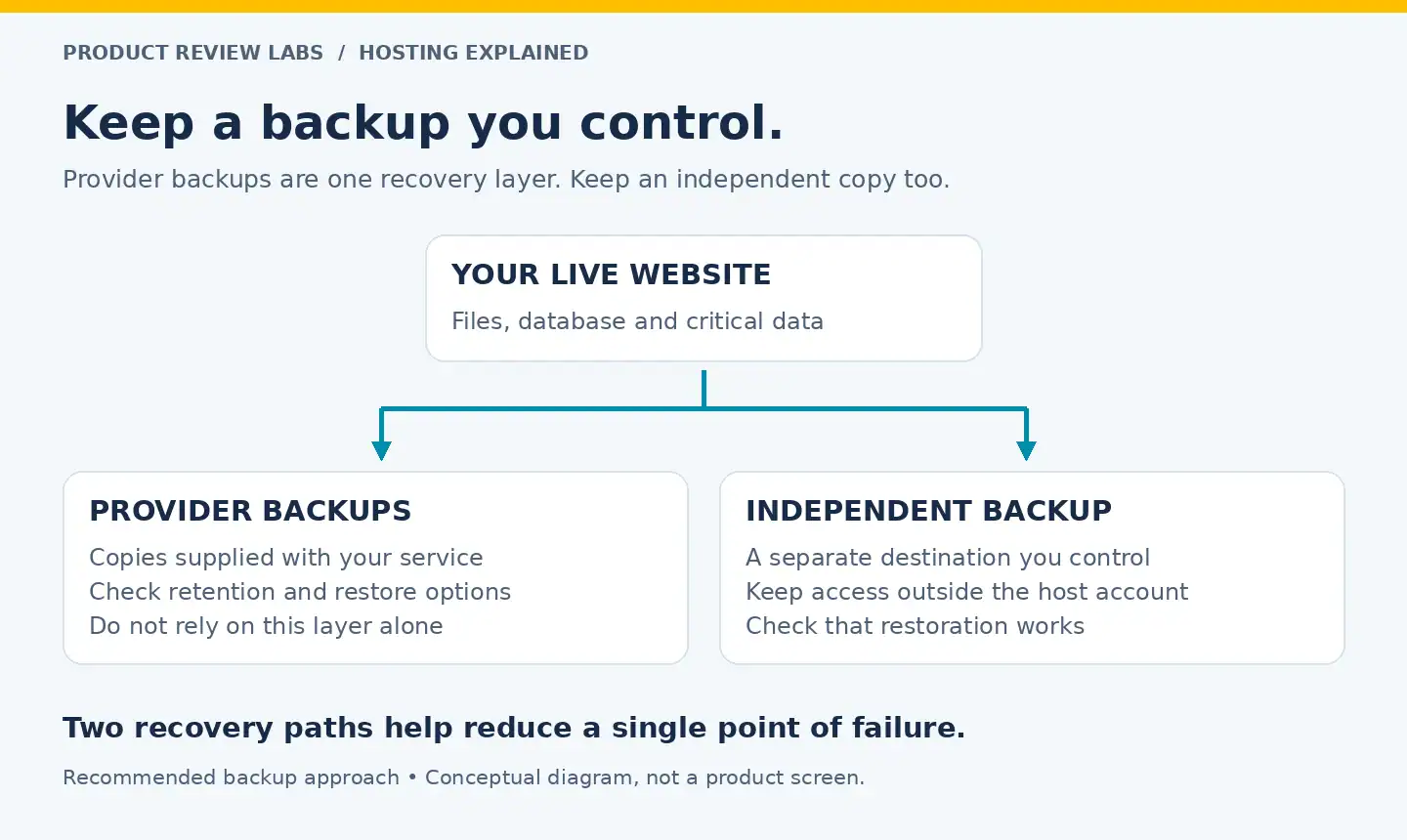
The same principle applies to account billing. Renewal invoices are generated seven days before expiry, and unpaid services can be suspended after the grace period and later terminated, with backups removed. Keep billing contacts current and retain an external backup before an account reaches that point.
Support, documentation, and management boundaries
ScalaHosting advertises round-the-clock support through live chat, email, and client-area tickets. Its knowledge base has dedicated areas for SPanel, web hosting, managed VPS, self-managed VPS, email, domains and DNS, security, billing, and common applications. That breadth is useful for routine setup work and for buyers who prefer to solve straightforward tasks without opening a ticket.
Support is described in the terms as best-effort and subject to exclusions. That is most relevant to self-managed VPS customers, because ScalaHosting does not provide ongoing server-administration support for the server you choose to manage. If you need someone else to maintain the stack, pay for managed cloud VPS rather than treating an unmanaged server as a managed one.
A third-party reviewer reported fast support replies but sometimes wanted more detailed guidance. The same review said a technical live-chat question was moved to tickets and that two sales-phone attempts did not reach an agent. That suggests tickets and chat are the channels to rely on for the published support model, not phone sales availability.
ScalaHosting promotes a 15-second average response time and 98.9% customer satisfaction. Those are provider claims, not a promise that every issue will be resolved at that pace. For a business with an unusual application stack, explain the workload and support expectations before selecting managed or self-managed service.
Terms that affect real-world use
Shared hosting is designed for ordinary websites, not high-volume infrastructure tasks. Its terms include CPU and memory limits, and sending more than 5,000 emails per month requires moving to VPS or dedicated service. That threshold matters for ecommerce stores, membership sites, and organisations using site-based newsletters or transactional mail at scale.
ScalaHosting prohibits crypto mining, torrents, game servers, bulk mail, and storage used like an offsite backup service. Those rules will not affect a normal company website, but they make shared hosting and VPS unsuitable for buyers intending to run bandwidth-heavy distribution, mass-email, or archival-storage workloads.
A free domain requires an initial hosting term of at least one year. If you use the hosting money-back guarantee, the domain can be charged separately. That is a reasonable cost to include in your first-year budget if the domain is part of the plan you select.
Cancellation must be submitted through the client dashboard. Emailing a cancellation request does not stop billing under the terms. That is a small administrative detail, but it matters when retiring a project or changing hosting providers.
Refunds and uptime remedies
ScalaHosting promotes an anytime unconditional money-back guarantee. The operative terms are more specific: eligible new clients can receive a full refund during the first 30 days, while eligible unused service can qualify for a partial refund. Several products are excluded, so the broad marketing phrase should not be read as a universal full refund at any point in a contract.
The 30-day window gives a new hosting customer time to move a site, assess the control panel, and decide if the service fits. It does not make independent backups optional, and it does not remove a domain charge that can apply where a free domain was used with a refunded hosting service.
The terms provide account credits on a sliding scale for qualifying downtime claims. A billing ticket with supporting information is required. Managed cloud and cluster customers should treat the SLA as a defined credit mechanism rather than an insurance policy for lost revenue, advertising spend, or business interruption.
ScalaHosting also advertises a $100 Managed VPS speed guarantee with limited eligibility. A claim must be made within seven days after migration, and ScalaHosting can optimise the service before deciding whether compensation applies. This is a narrow programme, not a general performance guarantee for every application.
Where ScalaHosting fits, and where it does not
ScalaHosting makes the strongest case for a business owner, WordPress publisher, or agency that wants a managed VPS with a proprietary panel, security tooling, migration help, a dedicated IP, and adjustable resources. The service has a clearer purpose once shared hosting has become too restrictive, but a fully self-managed server would create work your team does not want.
It is also a sensible email-only option for a business that needs custom-domain mail and standard desktop or mobile client access. Choose the plan around total storage, mailbox count, and domain allowance. The Cloud email plan is the one to start with if a dedicated IP and its published premium email features are central to the job.
Skip unmanaged VPS if root access sounds useful but your team cannot confidently maintain an operating system, configure services, secure the server, and troubleshoot problems. The managed plan costs more because it includes work that unmanaged hosting leaves with you.
Skip shared hosting for an application that sends more than 5,000 emails monthly, needs predictable dedicated resources, or depends on workloads prohibited by the terms. And skip cluster hosting for a typical small business site, because a custom architecture with at least five nodes is a different class of service and expense.
How to compare ScalaHosting alternatives
A useful alternative comparison starts with the service type, not the provider name. Compare shared hosting against shared hosting, managed VPS against managed VPS, self-managed VPS against self-managed VPS, and custom infrastructure against other custom infrastructure. A low-cost shared plan is not a meaningful substitute for a managed VPS with dedicated resources and server management.
For managed VPS comparisons, focus on regular renewal price, CPU and RAM allocation, storage type and amount, backup retention, migration scope, control-panel licence cost, dedicated IP availability, server-management boundaries, and the uptime-credit terms. Those details affect your monthly cost and workload far more than a headline site-count claim.
For self-managed VPS, weigh operating-system options, root access, snapshots, data-center availability, resource upgrades, add-on pricing, and how much administration your team can safely absorb. For business email, compare total storage, mailbox and domain limits, deliverability features, migration support, and the regular renewal bill.
No named competing host is included here because a credible recommendation requires like-for-like plan details. The practical choice is to match your workload and management needs first, then compare providers offering the same level of responsibility.
What other people think about ScalaHosting
Support is what customers talk about most, and the praise is consistent. Reviewers repeatedly describe reaching a real person on live chat within minutes, often outside business hours, and staff who stay with a problem until it is fixed. That includes DNS changes, email routing and Cloudflare setup that sit partly outside the hosting itself. A recurring story is someone who left a previous host after its support declined and found the difference here to be the main reason they stayed.
Migrations come up often too. Customers describe their sites and email accounts being moved for them with little disruption, including larger multi-site moves, and several who were nervous about switching say it went more smoothly than they expected. SPanel gets a smaller but steady share of praise as a clear, approachable alternative to cPanel, and some users mention faster page loads after the move.
The criticism is far less common, but it follows a pattern worth knowing. Some customers running busier sites describe running into CPU usage limits they had not expected, then being asked repeatedly to cut resource use without much help finding the cause. Others describe attacks and security incidents where the advice was to add an outside service rather than have the problem handled for them. That left them feeling they were running the server themselves more than a managed plan suggests. A longer-term VPS customer also reports recurring SPanel problems and slowdowns they had to discover and report on their own.
ScalaHosting actively invites its customers to leave reviews. That is common practice among hosts, and it is worth keeping in mind when weighing how one-sided the praise looks. Read that way, opinion is strongly positive about the people and more divided about how the platform holds up under heavy load. If your site is resource-hungry or a frequent target, ask how CPU limits are applied and monitored, and what security work the plan actually includes, before you commit.
ScalaHosting Review 2026: final verdict
ScalaHosting is a good fit for you if you are moving beyond basic hosting and want managed cloud VPS resources without becoming your own server administrator. The combination of SPanel, migration assistance, dedicated IPs, security tools, offsite backups, resource scaling, and managed support addresses the gap between a simple shared account and a server that your team must run alone.

Start with Managed VPS Build #1 if your current site needs dedicated resources and management but does not yet justify a larger server. Its regular $54.95 monthly price is the figure to judge, not the $29.95 introductory rate. Move up only when your site’s resource needs require it, because unlimited websites remain limited by the CPU, RAM, and storage you buy.
Choose unmanaged VPS only if you have the technical capability to own the administrative side of hosting. Choose Managed AWS when the Lightsail-based environment and ScalaHosting’s management model suit your infrastructure plans. Use cluster hosting for a genuinely high-traffic or multi-region application that needs a custom design, not as an ordinary performance upgrade.
The biggest reasons to pause are the renewal increases, the need for independent backups, shared-hosting email and resource limits, and the fact that support is best-effort rather than unlimited custom administration. For the right managed VPS buyer, though, ScalaHosting’s plan structure is more purposeful than treating every website as a shared-hosting project.
ScalaHosting Coupons & Discounts
ScalaHosting coupons and promo codes come and go, and their terms usually matter as much as the headline number: an offer can be limited to one plan or edition, to new customers, or to a short window. It is worth knowing what a discount actually applies to before it changes which option you pick, because the cheapest route on the day is not always the one that fits what you need.
Hosting discounts commonly appear as introductory pricing for a first term, a reduced initial billing period, or an offer applied during checkout. Compare any ScalaHosting deal with the published regular rate, the required billing term, the eligible service, and the resources included. Do not assume that an offer for shared hosting, email, or one type of VPS applies to another product.
Calculate the cost over the full period you expect to use the service, including renewals and any necessary backups, monitoring, control panel licences, software licences, or resource upgrades. A coupon can make the initial payment more attractive, but the regular price remains the safer figure for long-term budgeting. Also weigh the discount against refund terms, management responsibilities, migration support, and the amount of CPU, RAM, and storage your workload needs.
The cheapest eligible tier is not automatically the best value. A lower-cost shared or self-managed plan is not a saving if your application needs dedicated resources or your team cannot administer the server. Likewise, choosing an undersized VPS because it has the lowest discounted cost can lead to an early upgrade, so select the service type and capacity first, then treat any deal as a reduction in the cost of a suitable plan.
Any ScalaHosting coupons or discounts that become available will be posted on this page. This publication works with product developers to bring readers the best prices, the latest discounts, and sometimes exclusive coupons.
How this review was put together: This is a research-based evaluation rather than a hands-on test. It draws on the product's published plans, pricing and features, along with other publicly available information. The ratings in this review's score box are editorial judgements of the criteria listed, not measured test results, and the overall score is their average. Read how we review.